
Spicy Hunan Chicken Recipe is a classic Chinese chicken and vegetable stir fry dish in a savory ginger garlic sauce. Make this delicious restaurant favorite at home tonight!
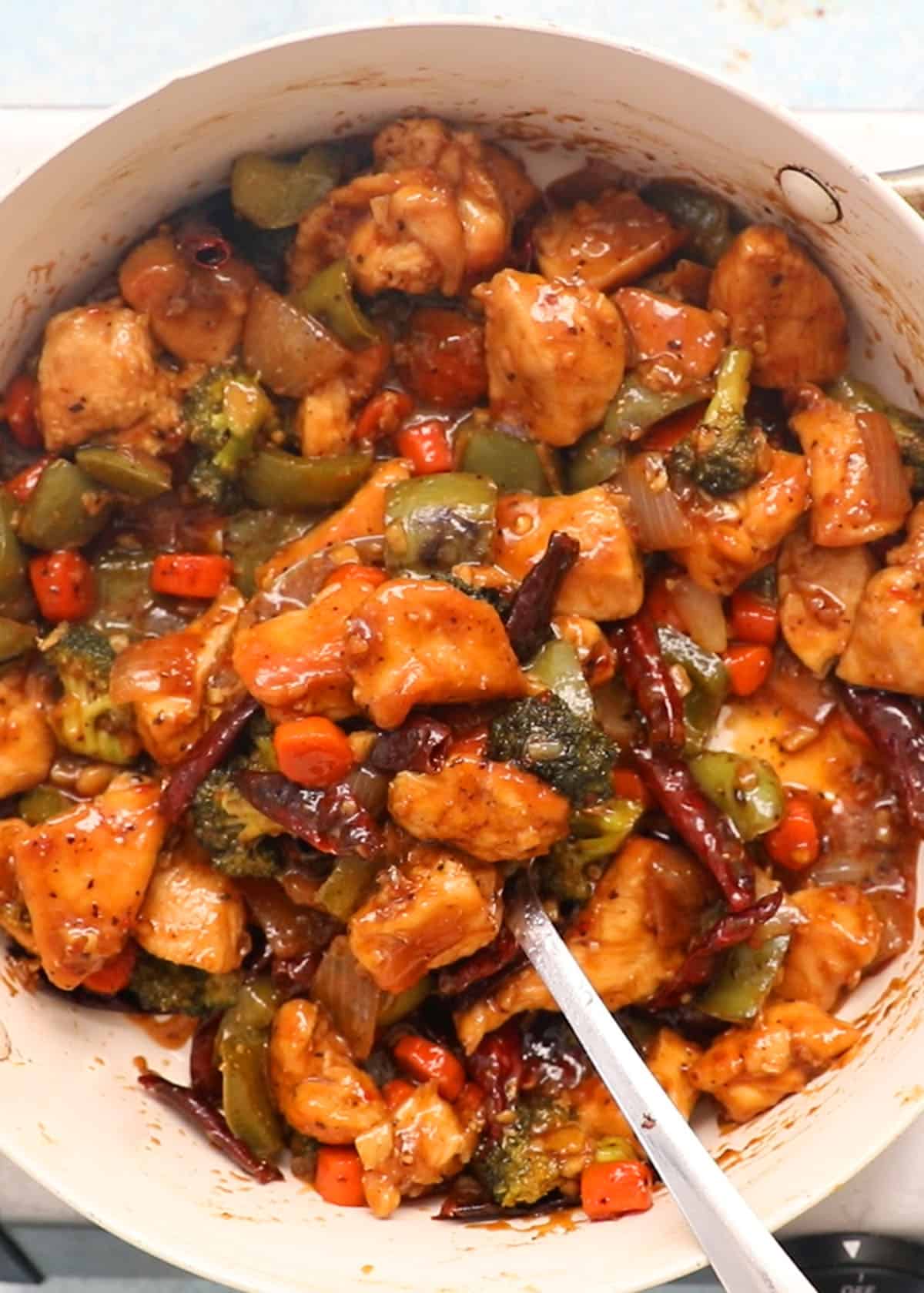
Best Hunan Chicken Recipe
While this dish draws inspiration from Hunan cuisine, Hunan Chicken as served in American-Chinese restaurants is actually a Western creation — it doesn’t exist in the Hunan province of China. That said, it beautifully captures the bold, spicy, and aromatic flavors that define authentic Hunanese cuisine. This reimagined takeout classic combines the fiery spirit of traditional Hunan cooking with the comforting convenience of your favorite Chinese takeout.
Jump to:
♡ What you’ll love about this recipe:
✔️ Quick & Easy: A 30-minute dinner that’s bursting with flavor and pairs perfectly with rice.
✔️ Complete Meal: Packed with protein and mixed vegetables, all cooked together in one pan for minimal cleanup.
✔️ Incredible Flavor: The Hunan sauce has the perfect balance of savory, sweet, spicy, and tangy, coating every bite of chicken and veggies beautifully.
✔️ Juicy Chicken: Lightly coating the chicken in cornstarch before cooking helps it stay tender and juicy while allowing the sauce to cling perfectly.
✔️ Great for Meal Prep: This recipe stores and reheats wonderfully — I often make a double batch to enjoy throughout the week!
Ingredients
Scroll down to the recipe card below for full information on ingredients and amounts.
- Boneless Chicken. In testing, I tried this recipe with both chicken thighs and breasts. While my go-to is always chicken thighs, it works wonderfully with breasts, too. I coat the chicken chunks in cornstarch and sear them on both sides, which develops a nice crust and seals in the juices, keeping the meat tender. So, use thighs or breasts—whatever you have on hand—it will turn out amazing.
- Cornstarch. Cornstarch is used to coat the chicken pieces, helping them sear beautifully while locking in the juices. It also helps thicken the Hunan-style sauce.
- Oil. Use a neutral-flavored oil with a high smoke point, such as vegetable or sunflower oil.
- Vegetables. Remember, this isn’t an authentic Chinese stir-fry—it’s more of a Western-style creation. I’ve used a mix of broccoli, bell peppers, carrots, and onions. Different types of peppers are especially important because of the heat they bring to the dish.
- Ginger and Garlic. Garlic is used extensively in Hunan cuisine, adding a deep, aromatic flavor. Lots of minced ginger and garlic bring incredible depth and taste to the dish.
- Dried Red Chili Peppers. Chili peppers are another defining characteristic of Hunan cuisine, adding a fiery kick to this stir-fry. Adjust the amount to suit your spice preference, or substitute with fresh red chilies or chili flakes.
Ingredients for Hunan Sauce
Scroll down to the recipe card below for full information on ingredients and amounts.
- Chicken Stock: Lays the flavorful foundation for our Hunana sauce, making it rich and robust. One thing I want to note from recipe testing is the sodium level in the stock used. I used 33% reduced-sodium chicken stock and found the salt level to be just right. If you’re using no-sodium stock, you may need to add about ⅛ to ¼ teaspoon of salt.
- Oyster Sauce: This is the primary seasoning for my Hunan Chicken sauce. It delivers a perfect balance of salty, sweet, and umami flavors, making the sauce simpler and more cohesive without needing several separate ingredients.
- Rice Vinegar: Rice vinegar adds a bright, tangy finish that balances the savory, sweet, and spicy flavors.
- Soy Sauce: Adds rich umami depth to the chicken and vegetables stir fry. Use tamari, low-sodium, or gluten-free soy sauce if preferred.
- Sugar: Balances the tanginess of the rice vinegar and the saltiness of the soy sauce.
- Chili Garlic Paste: The key ingredient that sets this chicken stir-fry apart from others. I like using sambal oelek, but any spicy chili sauce works well.
How to make Hunan chicken
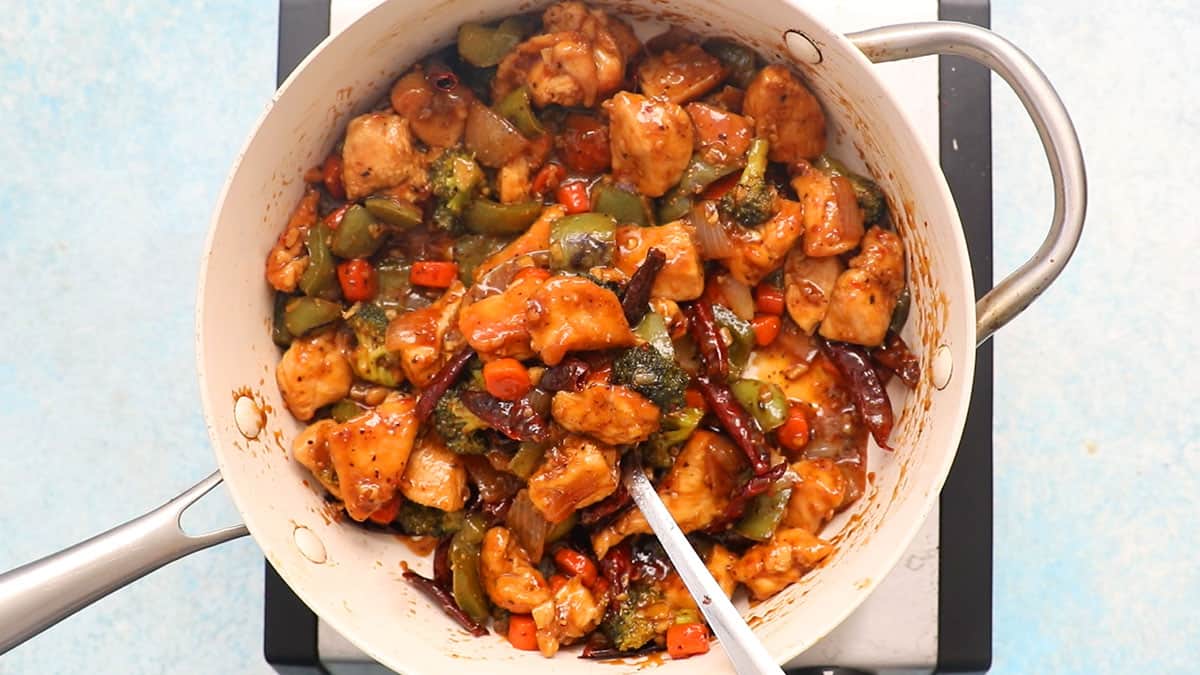
You can find full printable recipe below, but here is a quick overview of the procedure along with step-by-step photos.


Want To Save This Recipe?



Variations
This Hunan Chicken recipe is bold, flavorful, and easy to customize. Try these variations to suit your taste and what you have on hand:
Vegetables: Mix and match your favorite vegetables — carrots, onions, mushrooms, zucchini, or eggplant all work beautifully. Add extra color and crunch with bell peppers, broccoli, or snap peas. You want a total of 4 to 5 cups diced mixed vegetables.
Protein: Use boneless chicken thighs or breasts for this recipe. You can also substitute thinly sliced beef, pork or tofu for a different protein option.
Nuts: While not traditional, adding a handful of roasted cashews or peanuts adds an extra layer of texture and flavor.
Chili Sauce: Experiment with different chili sauces — try chili crisp, chili crunch, or even sriracha for a unique kick.
Tips for Success
- Adjust the spice level: This chicken in Hunan sauce is mildly spicy, but you can easily turn up the heat. Add more dried red chilies or red pepper flakes to match your spice tolerance.
- Use a variety of vegetables: Feel free to mix in your favorites — Chinese broccoli, zucchini, snap peas, bok choy, mushrooms, or eggplant all work great in this stir-fry.
- Switch up the protein: Not in the mood for chicken? Try pork, beef, shrimp, or tofu for a delicious alternative.
- Avoid overcrowding the pan: If you’re not using a large skillet or wok, cook the chicken in two batches. This ensures a proper sear instead of steaming, giving you tender, flavorful meat.
- Cut vegetables evenly: Slice carrots thinly, cut broccoli into medium florets, and chop bell peppers and onions into 1-inch pieces. Uniform cuts help everything cook quickly and evenly.

More Chinese Chicken Dishes

Spicy Hunan Chicken Recipe
Ingredients
Sauce
- ½ cup chicken stock I used 33% reduced sodium
- 2 tablespoons soy sauce
- 2 tablespoons oyster sauce
- 2 tablespoons sugar
- 1 tablespoon chili garlic sauce
- 2 teaspoons rice vinegar
- 1 teaspoon cornstarch
Stir Fry
- 1 pound boneless skinless chicken breasts or thighs cut into chunks
- 2 tablespoons cornstarch
- 4 tablespoons vegetable oil divided
- 1 cup broccoli florets cut into medium size
- 1 small green bell pepper cored seeded and diced
- 1 large carrot peeled and thinly sliced
- ¾ cup diced onion
- 3 large garlic cloves minced
- ½ tablespoon minced ginger
- 8 to 20 dry red chilies depending on spice level
- ¼ teaspoon ground black pepper
Instructions
- Make sauce. Add all sauce ingredients into a medium bowl and stir well to dissolve sugar and set aside.
- Cook chicken. Toss chicken with cornstarch in a bowl. Add 3 tablespoons of oil into a large skillet and place over high heat. When hot, place chicken in a single layer and cook for about 4 minutes, turn over and cook for an additional 2 minutes or until thoroughly cooked yet tender. Remove chicken onto a plate (If using a medium-sized pan, then cook chicken in two batches).
- Saute veggies. Add the remaining tablespoon of oil to the same pan over high heat. Add the broccoli, bell pepper, carrot, and onion, and stir-fry for about 4 minutes, until the vegetables are tender-crisp.
- Finish stir fry. Stir in garlic, ginger, and dry red chilies, saute for an additional one to two minutes. Add the sauce (give a stir before pouring), cooked chicken along with any accumulated juices, and ground black pepper. Continue cooking over high heat (stirring occasionally), until the sauce has thickened and coats the chicken and vegetables (about 2 minutes).
- Give a taste and a couple of pinches of salt if needed (it will depend on the type of stock used). Serve with cooked rice or noodles!
Notes
Nutrition
Nutritional information, based on third-party calculations, should be seen as estimates, not guarantees, as various factors like product types, brands, processing methods, and more can alter the nutritional content in recipes.
Frequently Asked Questions
Hunan and Sichuan cuisines are both famous for their bold flavors, generous use of oil, and love of spice — so it’s easy to mix them up. The main difference lies in the type of heat each region is known for.
Sichuan cuisine often features Sichuan peppercorns, which create a distinctive numbing and tingling sensation.
Hunan cuisine, on the other hand, relies on fresh and dried chilies for a more direct, clean, and fiery heat — without the numbing effect.
Interestingly, among Chinese diners, Hunan dishes are actually considered hotter than Sichuan ones — a fun surprise for many Americans who think of Sichuan food as the spiciest around!
Even though you’ll see plenty of whole red chilies in this stir-fry, it’s not nearly as spicy as it looks. The chili garlic sauce used in the Hunan sauce adds flavor and mild heat, but it isn’t overly spicy.
The dried red chilies are added toward the end and left whole — since most of the heat comes from the seeds and membranes, they infuse the dish with a wonderful smoky, peppery aroma rather than intense spiciness.
If you love extra heat, simply add some red pepper flakes or toss in a few more dried chilies to turn things up a notch.
I love making spicy Chinese food at home, and some of our favorites are air fryer firecracker tofu, a crisp Asian cucumber salad, shrimp and broccoli stir-fry, and of course, this fresh and flavorful Hunan chicken.